What is a real Dzi stone?
+
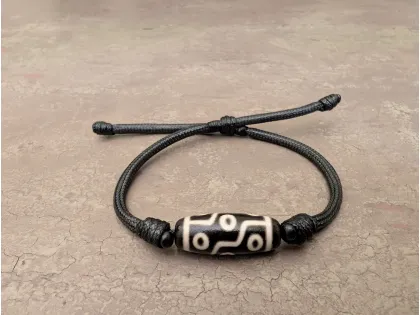
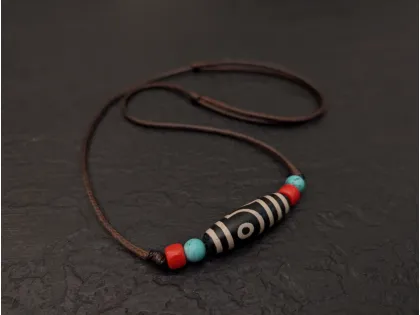
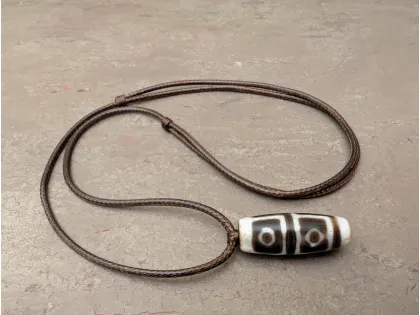
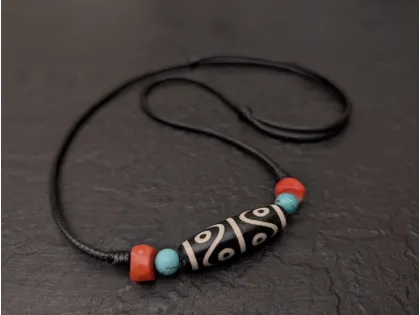
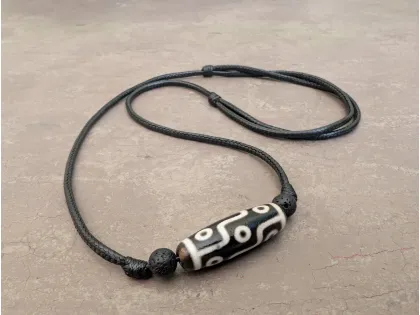
A real Dzi is an ancient agate from the Himalayas that has been worn as a protective stone for centuries. In my years working with these stones, I have learned that what makes them special is the natural banding with its characteristic "eyes", which makes every stone unique. An authentic Dzi carries a lived history, not machine-made perfection.
How can I tell a real Dzi from a fake?
+
Look closely at the surface: a genuine, old Dzi shows fine signs of wear, small dents and a matte, living patina. Fakes often look too smooth, too shiny and have perfectly even patterns. My practical tip: the eyes of a real Dzi are never identical, so take the stone in your hand and feel its weight and temperature.
Where do Dzi stones come from?
+
The original Dzi stones come from the Himalayan region, above all from Tibet, Nepal and Bhutan. There they are traditionally passed down from generation to generation. I source my stones with care and respect for this tradition, so that you hold a piece of genuine culture in your hands.
What materials is a mala made of?
+
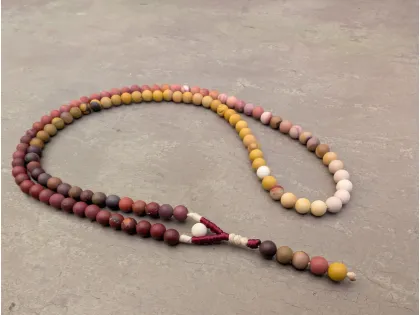
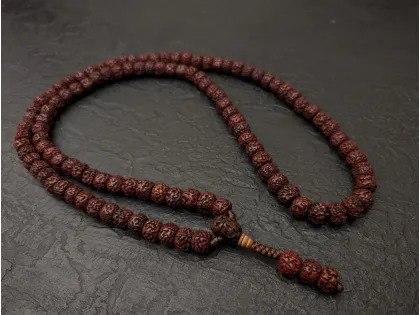
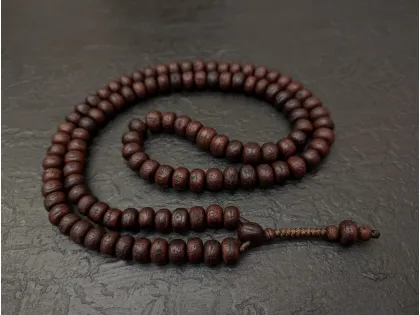
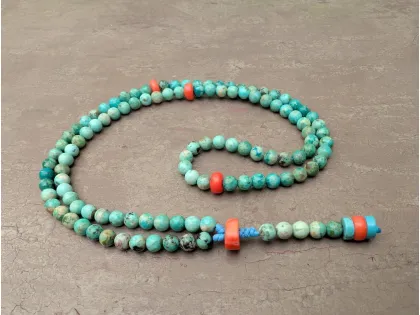
A mala is traditionally made from natural materials: sandalwood, rudraksha seeds, bodhi seeds or gemstones such as agate, rock crystal and lava. Each material has its own character and effect. I choose the materials personally, because only genuine natural material truly feels right when you wear it and meditate.
Why does a mala have 108 beads?
+
The number 108 is considered sacred and complete in many Eastern traditions. While meditating it helps you count a full round of mantras without losing your place. For me, 108 is also a beautiful rhythm: it gives your practice both structure and calm.
Which mala is right for me?
+
It depends on your feeling and your goal: are you looking for grounding, protection or clarity? Let yourself be guided by the colour and material that speaks to you straight away; often your gut already knows the answer. Feel free to write to me and I will advise you from my own experience to help you find the right mala.
What do the "eyes" of a Dzi mean?
+
The number of eyes on a Dzi has its own meaning: one eye stands for clarity, two for harmony in partnership, three for luck and prosperity. Many of my customers deliberately choose a stone by the number of eyes. My advice: choose the eye that should accompany your current phase of life.
How do I care for my Dzi and mala?
+
Clean the stone gently with a soft, dry cloth and avoid harsh chemicals and perfume. A mala made of wood or seeds does not like moisture, so place it in a quiet, dry spot after wearing. I recommend letting the stone "breathe" in the sun or moonlight now and then, so it stays your faithful companion.
Can I wear my Dzi and mala every day?
+
Yes, and that is exactly what they are made for. The more often you wear your Dzi and mala, the more they become a part of you. From my own experience: I take them off briefly for sport, showering or sleeping, so the stone and the cord stay beautiful for a long time.
Why should I buy from you?
+
I only sell stones and malas that I have checked myself and would personally wear. Every Dzi is selected by hand, and I support you with real experience instead of empty promises. If you have questions you can reach me directly; I am happy to guide you in choosing your piece.