

Tibetan Prayer Wheel: Meaning, Use and Origins

Daria Berezhna
Founder, ZENstore.at ·
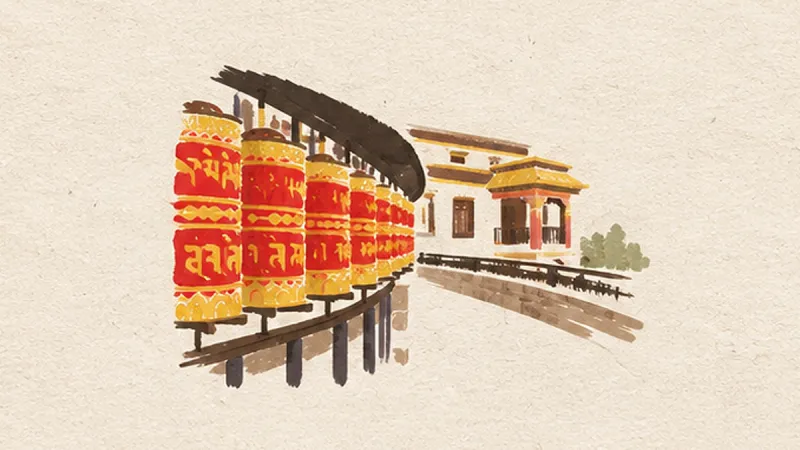
A Tibetan prayer wheel (mani khorlo in Tibetan) is a hollow cylinder that spins on an axis and holds a tightly rolled scroll printed with a mantra many times over, usually "Om Mani Padme Hum". In Tibetan Buddhism, each clockwise turn counts as reciting every mantra inside the scroll. This guide explains how a Buddhist prayer wheel works, the different types from hand-held to tabletop wheels, where prayer wheels come from and what the mantra means. You'll also learn how to spin a prayer wheel the right way, what people believe it does and what to look for if you want to buy a prayer wheel.
What is a Tibetan prayer wheel and how does it work?
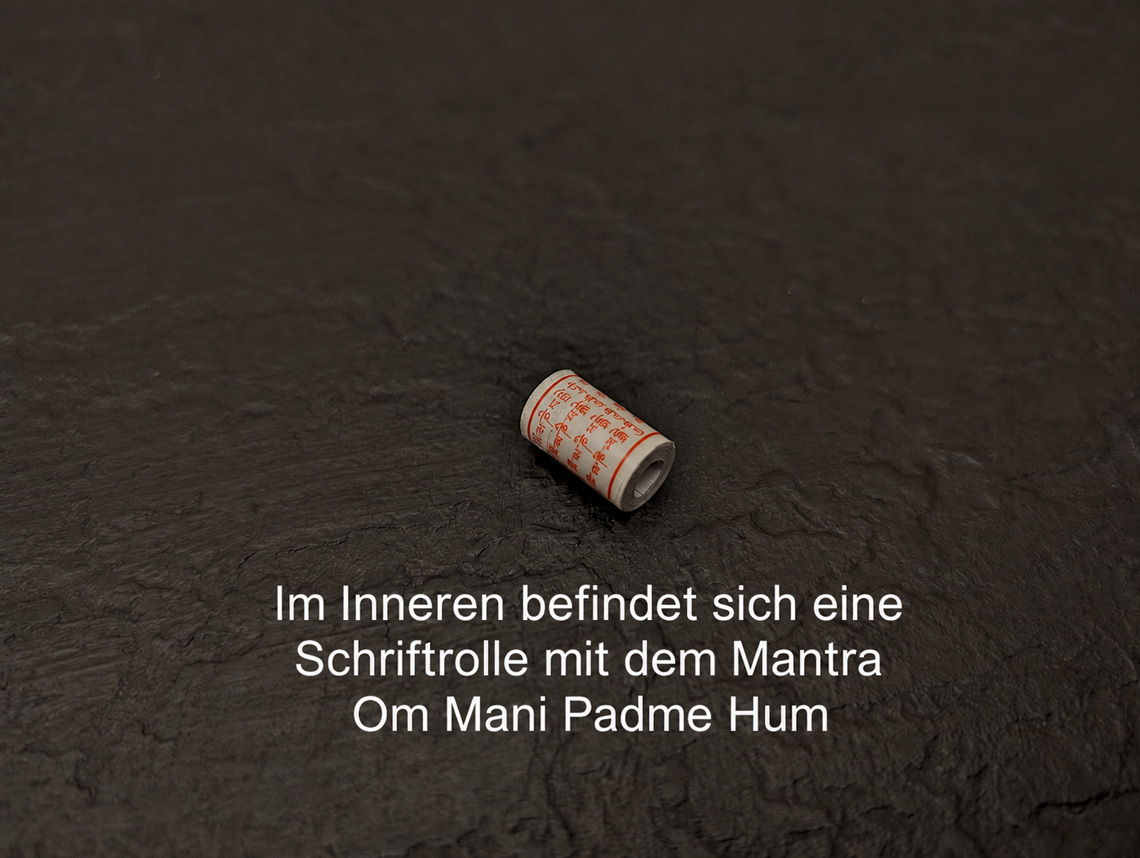
A prayer wheel is a tool for prayer that sets mantras in motion as it turns. At its heart is a tightly wound paper scroll with the mantra printed on it hundreds or even thousands of times, and every turn moves all of them at once. The scroll is wrapped around a central rod known as the "life tree" and sealed inside a case of metal or wood. The same syllables are often engraved on the outside too.
Types of prayer wheels
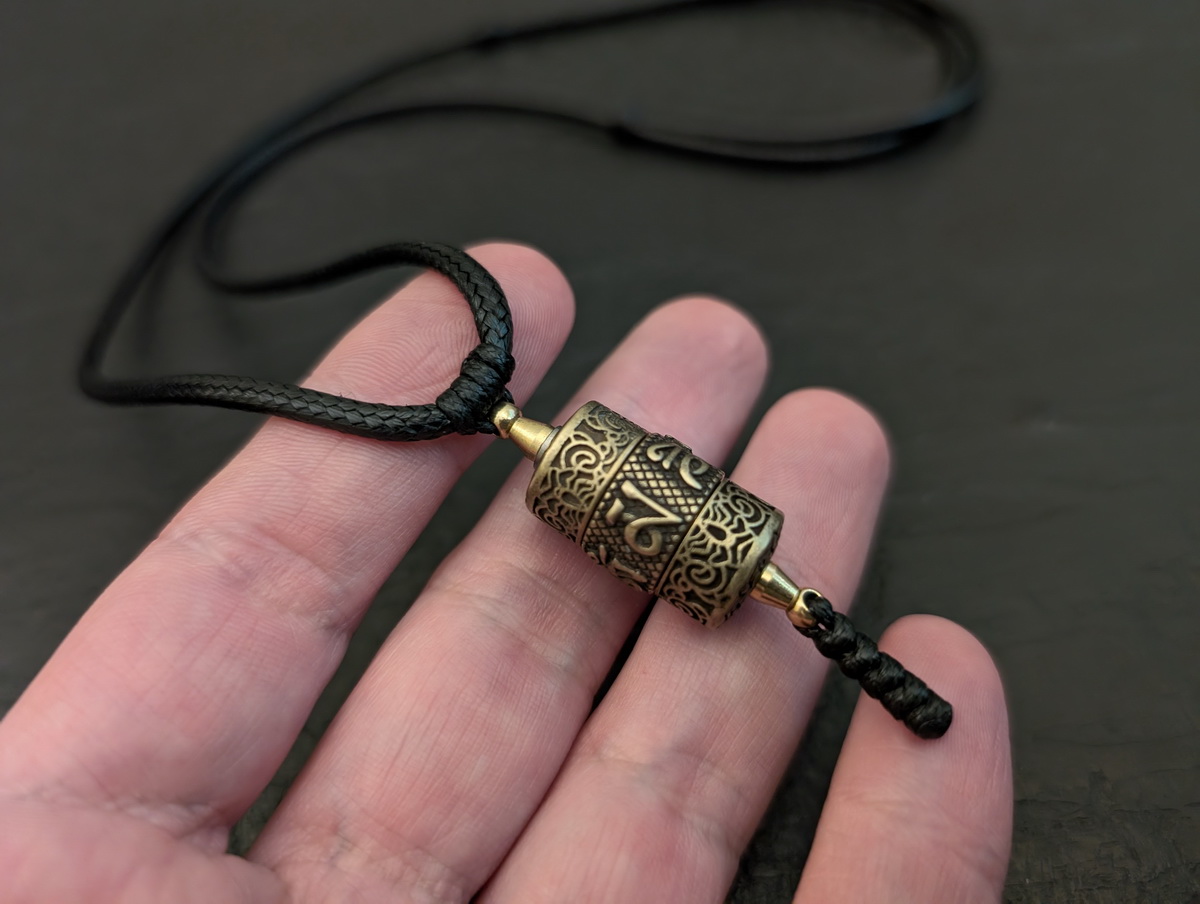
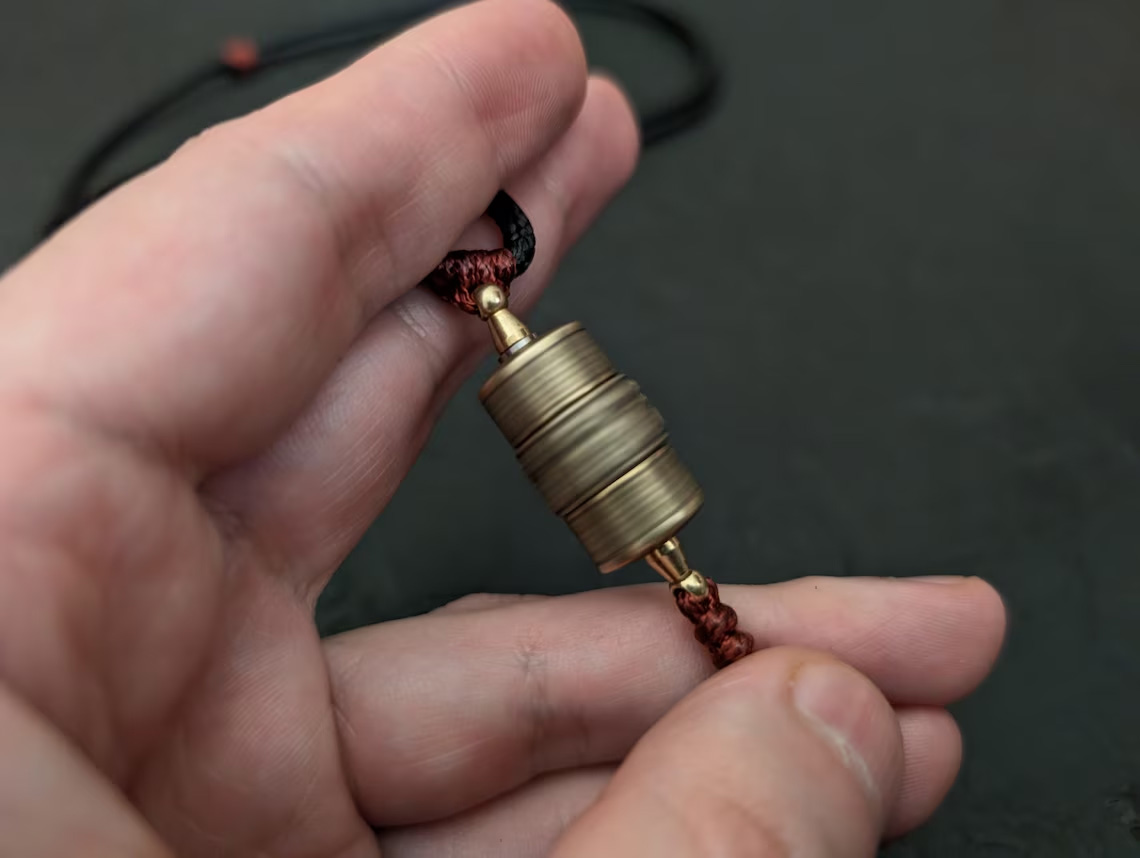
- Prayer wheel pendant: a miniature you wear around your neck and spin between two fingers.
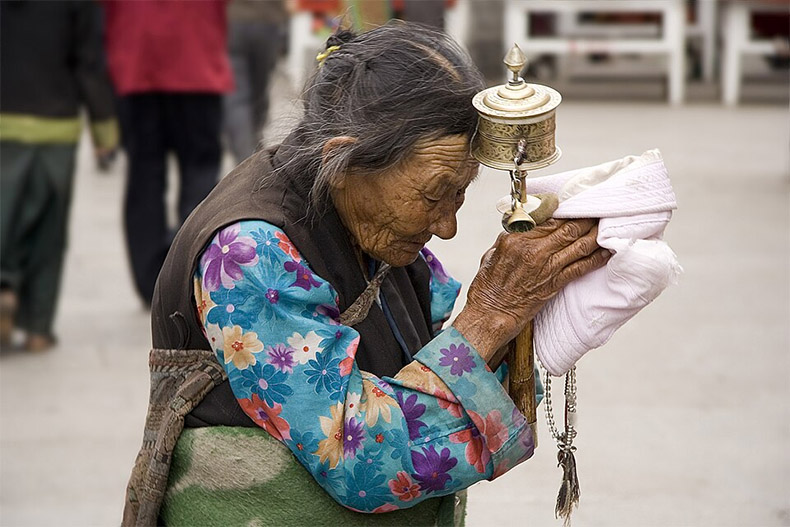
- Hand-held prayer wheel: has a handle and a small weight on a chain that keeps it spinning. People carry it while walking or turn it during meditation.
- Tabletop prayer wheel: stands on a base, often on a home altar. Some have a small solar panel and turn on their own.
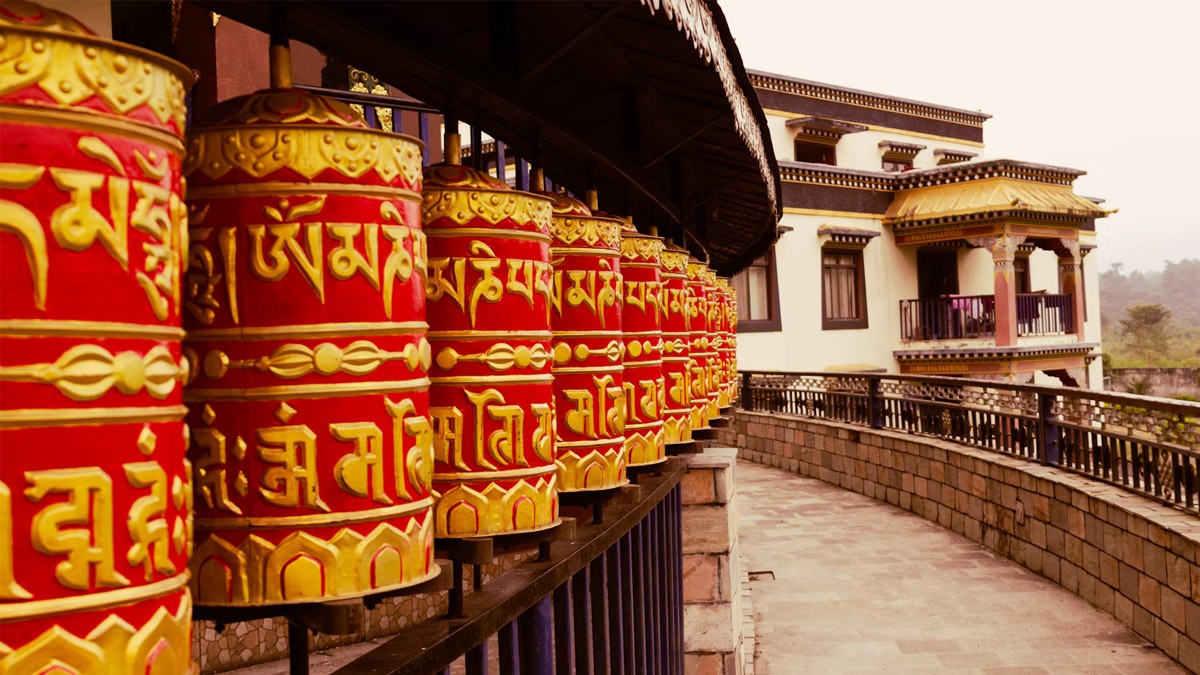
- Wall-mounted prayer wheels: long rows around monasteries and stupas that pilgrims set spinning with their right hand as they walk past.
- Large prayer wheels: often taller than a person and housed in their own buildings.
- Water, wind and lamp wheels: a stream, the wind or the heat of a butter lamp keeps them turning day and night. Tibetans believe that whatever touches the mantras carries their blessing onward. The water takes it to every creature downstream, and the wind spreads it across the whole valley.
Where do prayer wheels come from?
Prayer wheels come from Tibet and spread from there across the Himalayan region. Nobody knows exactly when the first one was made. Tibetan tradition credits the Indian master Nagarjuna, who lived in the 2nd century. The idea of turning runs deep in Buddhism: according to tradition, the Buddha set the "wheel of the Dharma" in motion with his first teaching at Sarnath.
In Tibet, prayer wheels are still part of everyday life. In Lhasa, pilgrims walk the Barkhor circuit around the Jokhang Temple, often with a hand wheel in the right hand and prayer beads in the left. Older people spin theirs for hours while quietly murmuring mantras. You'll also find prayer wheels at almost every monastery in Nepal, Bhutan, Ladakh and Mongolia.
What does Om Mani Padme Hum mean?
"Om Mani Padme Hum" is the mantra of compassion. It belongs to Avalokiteshvara, known in Tibet as Chenrezig, the bodhisattva of compassion. Tibetans regard the Dalai Lama as an emanation of Chenrezig, which helps explain why the mantra is everywhere in Tibet. There, it's usually pronounced "Om Mani Peme Hung".
"Mani" means jewel and "padme" means lotus, which is why you'll often see it translated as "Om, the jewel in the lotus". The jewel stands for the wish to help others, and the lotus for wisdom that stays pure even though it grows out of mud. Each of the six syllables is also linked to one of the six perfections: generosity, ethics, patience, effort, concentration and wisdom.
How to spin a prayer wheel
A Buddhist prayer wheel is turned clockwise, slowly and steadily. That way the syllables move in the direction they're read, following the same path pilgrims take around a temple. Followers of Bön, Tibet's pre-Buddhist religion, turn their wheels anticlockwise.
While it spins, you can repeat the mantra or simply keep compassion in mind. Buddhists turn the wheel for the benefit of all living beings, and the blessing is believed to spread out in every direction with each turn. Many people also use a prayer wheel during meditation, since the even rhythm slows the breath and brings attention back to the present moment.
In Tibetan belief, turning the wheel clears away negative karma and builds merit. In the West, many people wear a small prayer wheel as a reminder to stay calm and kind during the day. These meanings come from religious tradition and personal experience. They're meant in a spiritual sense and are no substitute for advice from a doctor.
Besides the prayer wheel, dzi beads are especially popular, and their "eyes" are seen as protective symbols. A gau is a small amulet box that traditionally holds blessed prayers or images. Many people also wear a mala of 108 beads, the endless knot as a symbol of good fortune and connection, or a red protection cord blessed by a lama.
Why shouldn't you unscrew the pendant to check the scroll?
The thread on the top screw is very fine and can easily strip when you open it. After that, the cylinder often sits crooked and no longer spins evenly. The thin paper scroll can also slip or tear. In Tibetan tradition, a prayer wheel is blessed and sealed once the scroll is inside, so it isn't opened without good reason. You can see what the scroll looks like in the photo further up.
Buying a prayer wheel: what to look for
A good prayer wheel spins freely without catching and sits comfortably in your hand. On metal wheels, take a close look at the engraving, since cleanly cut syllables are a sign of careful work. You can't tell from the outside whether there's really a mantra scroll inside, so trustworthy sellers show it in a photo, as we do further up. Which type suits you depends on where you'd like to turn it. There's more on that in the FAQ on hand-held and tabletop wheels below.
If you want to carry it with you, a miniature you wear around your neck works well, like our prayer wheel pendant. The bronze case is engraved with "Om Mani Padme Hum", a scroll with the mantra sits inside, and the cylinder spins easily between two fingers. It comes on an adjustable cord in red or black. In Tibet, red is the colour of protection, which is why blessed protection cords are usually red too. The pendant costs €32.99.